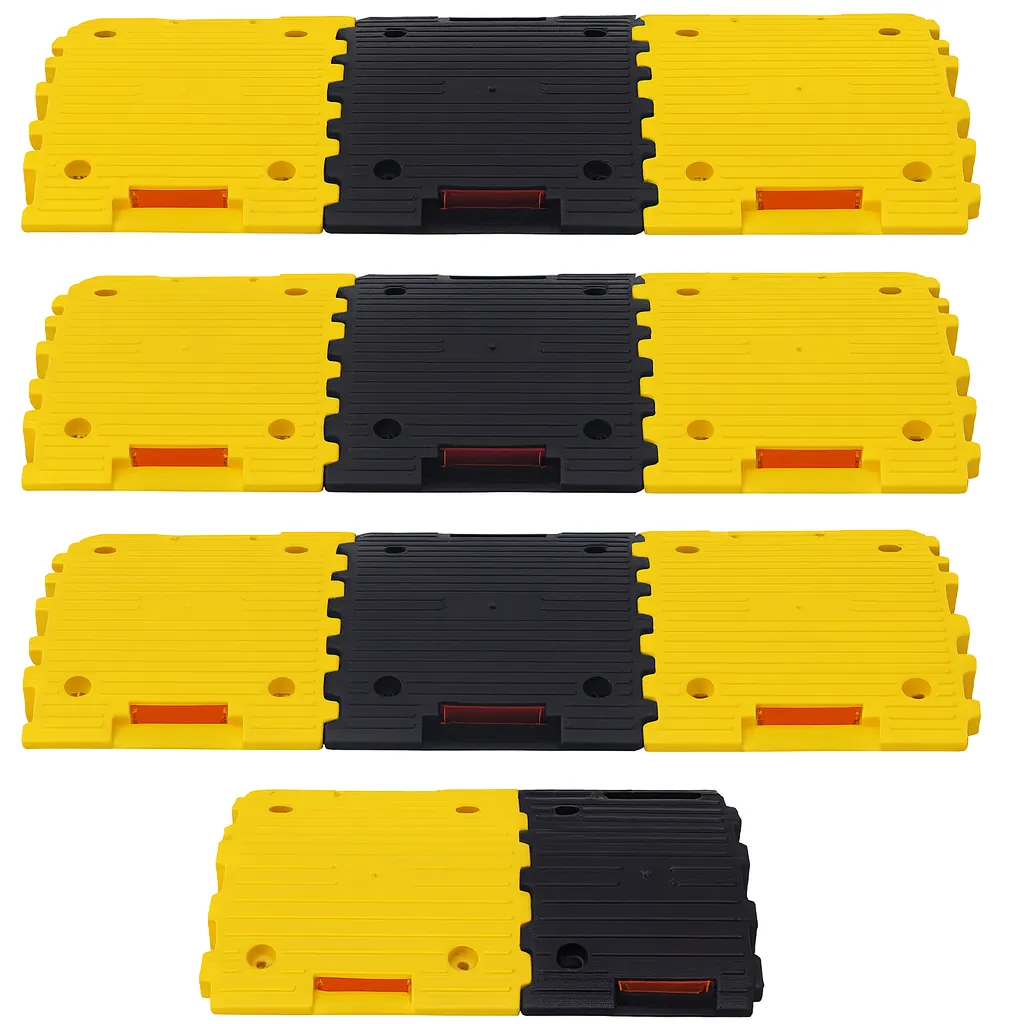

Speed breakers (speed bumps) are the most direct way to slow vehicles in parking lots, housing societies, factory roads and campus entrances. Modular plastic speed breakers have largely replaced concrete humps on private premises because they are quick to install, uniform in shape and easy to see. Here is what to consider before you buy.
Plastic vs concrete speed breakers
| Modular plastic | Cast-in-place concrete | |
|---|---|---|
| Installation | Bolted down in hours; road reopens the same day | Formwork, pouring and curing; road closed for days |
| Shape | Factory-moulded, every unit identical | Depends on the workmanship; often too high or uneven |
| Visibility | Yellow and black panels with reflectors | Needs painting, which wears off |
| Changes later | Units can be unbolted and moved or reused | Must be broken out |
Sizing: height and length
Kunplast's heavy-duty plastic speed breaker modules measure 350 × 250 × 50 mm. The 50 mm height slows cars to a crawl in parking and gate areas without damaging vehicles at low speed. Modules interlock into 1-metre sections, and each box contains 5 metres.
To work out how many boxes you need: measure the full width of the road or driveway from kerb to kerb, round up to the next metre, and divide by 5. A 7.5 m wide internal road needs 8 m, which is 2 boxes. Add end caps if your layout needs them, and leave no gap that drivers can steer through.
Where plastic speed breakers work best
- Parking lots and basements
- Gates of housing societies, offices and schools
- Factory, warehouse and logistics-park internal roads
- Hospital, hotel and mall driveways
- Petrol pumps and commercial facilities
On public roads, speed humps must follow the road authority's design rules and Indian Roads Congress guidelines, and usually need permission. Plastic modular breakers are mainly used on private and internal roads.
Speed breaker or rumbler strip?
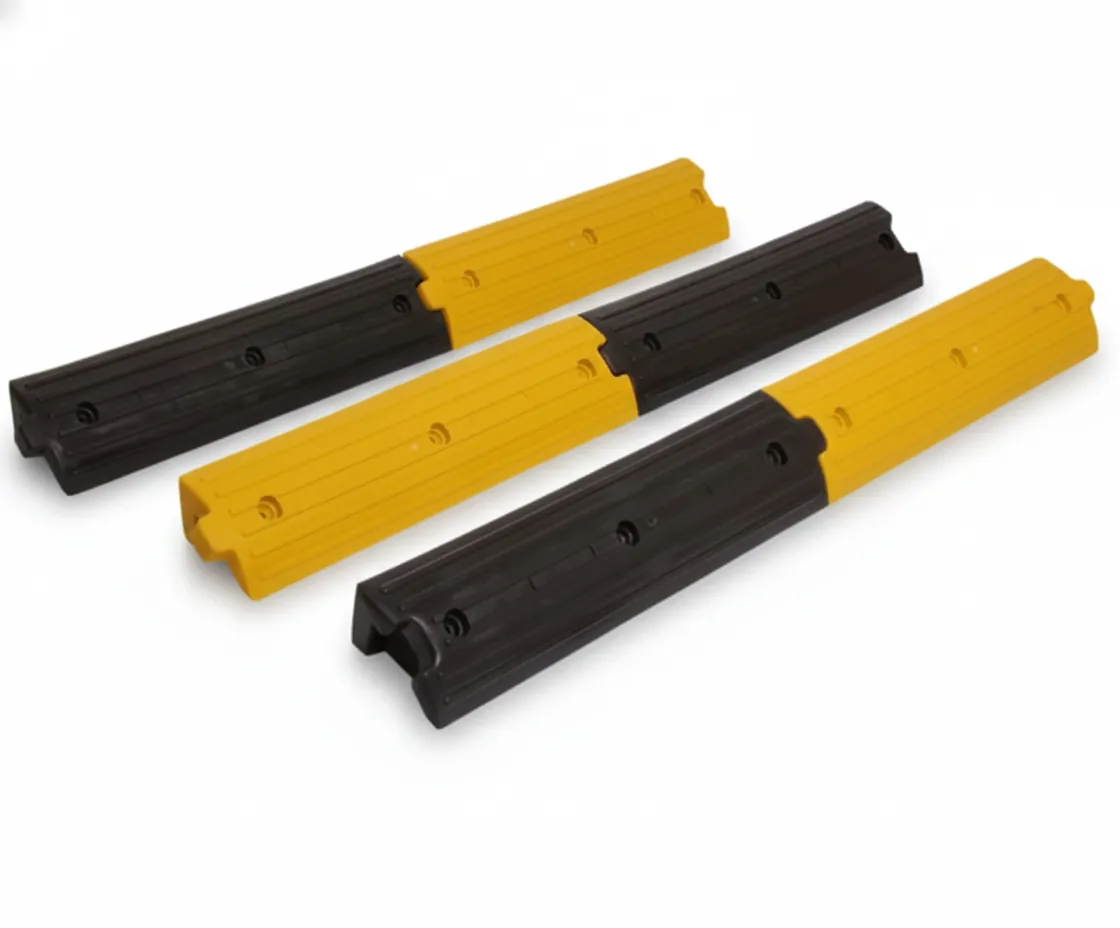
If you only want to warn drivers rather than force them to slow sharply, for example before a junction, toll plaza or school gate, a series of rumbler strips (25 mm high) creates noise and vibration without a full bump.
Installation checklist
- Mark a straight line across the road at the chosen location.
- Lay out the interlocking units and check the full width is covered.
- Drill the road surface through the mounting holes.
- Fix each unit with suitable anchor bolts for asphalt or concrete.
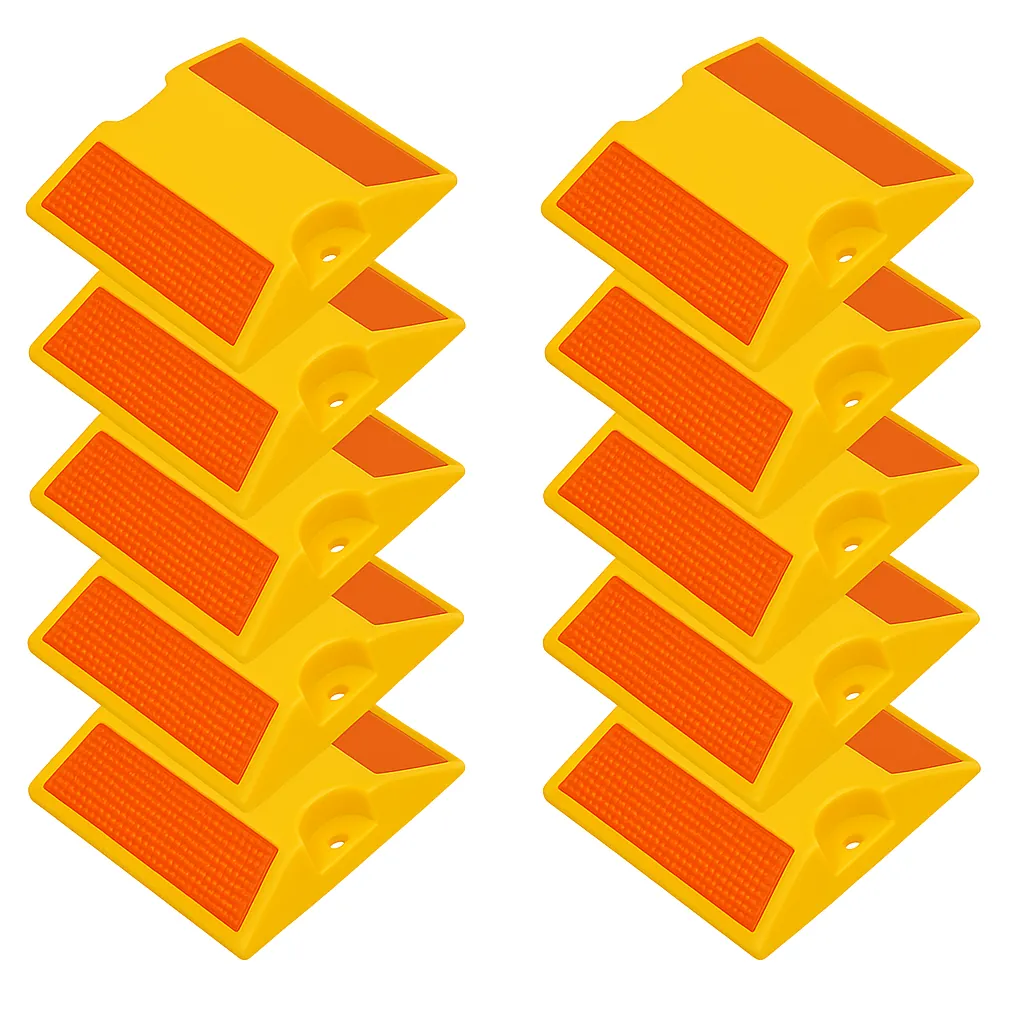
- Add a warning sign and, where possible, road studs on the approach for night visibility.
Maintenance
Check bolts every few months, since heavy vehicles can loosen them, and wash the units so the yellow panels and reflectors stay visible. Damaged modules can be replaced individually.
Also see our rubber speed breaker guide.
Order speed breakers in bulk
Kunplast manufactures plastic speed breakers in Ahmedabad and supplies societies, facility managers, contractors and dealers across India. Send us your road width and quantity for a quote.
Frequently asked questions
How high should a speed breaker be for a parking lot?
For parking and gate areas a low-profile breaker around 50 mm high is common. It slows cars to walking speed without damaging vehicles.
How many speed breaker boxes do I need?
Measure the road width in metres, round up, and divide by 5. Each Kunplast box contains 5 metres of interlocking units.
Can plastic speed breakers handle trucks?
They are made from impact-resistant material for continuous use and are bolted to the road. Inspect bolts regularly on roads with heavy vehicles.