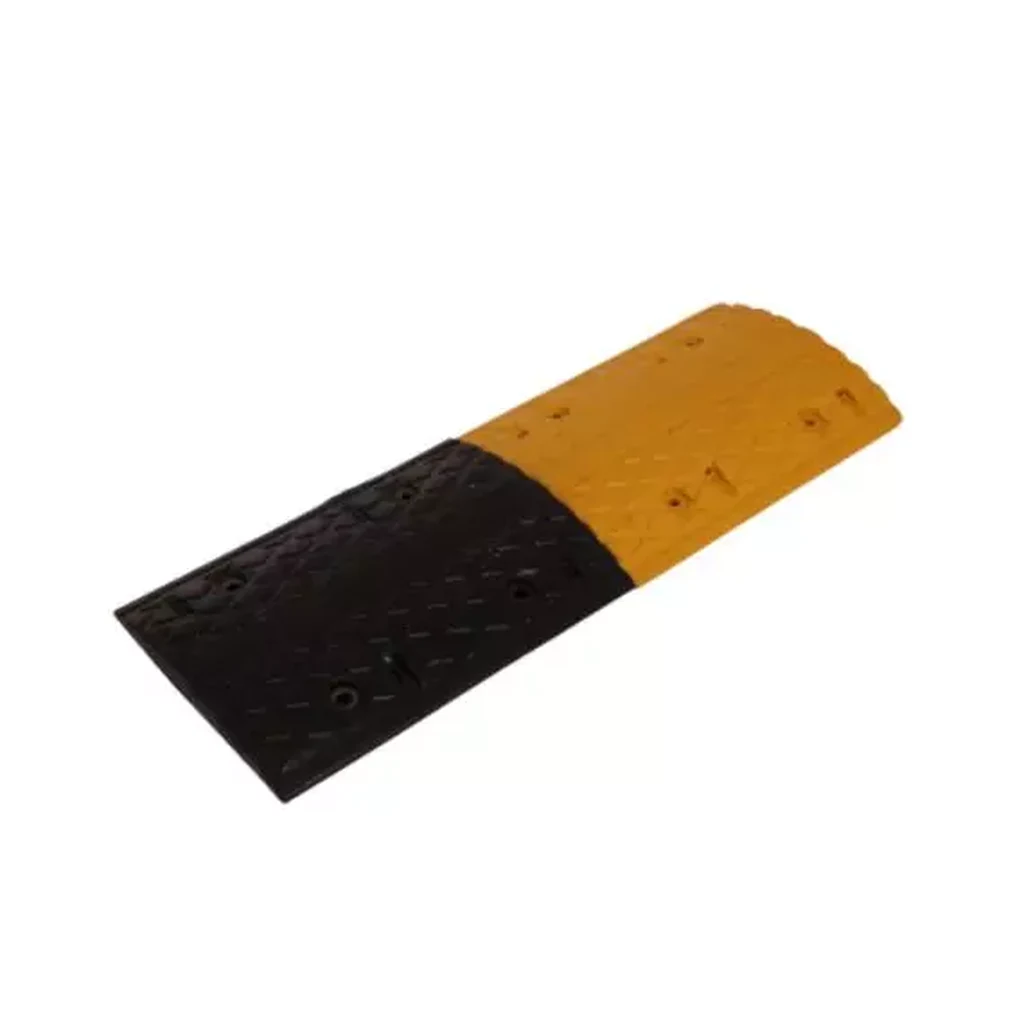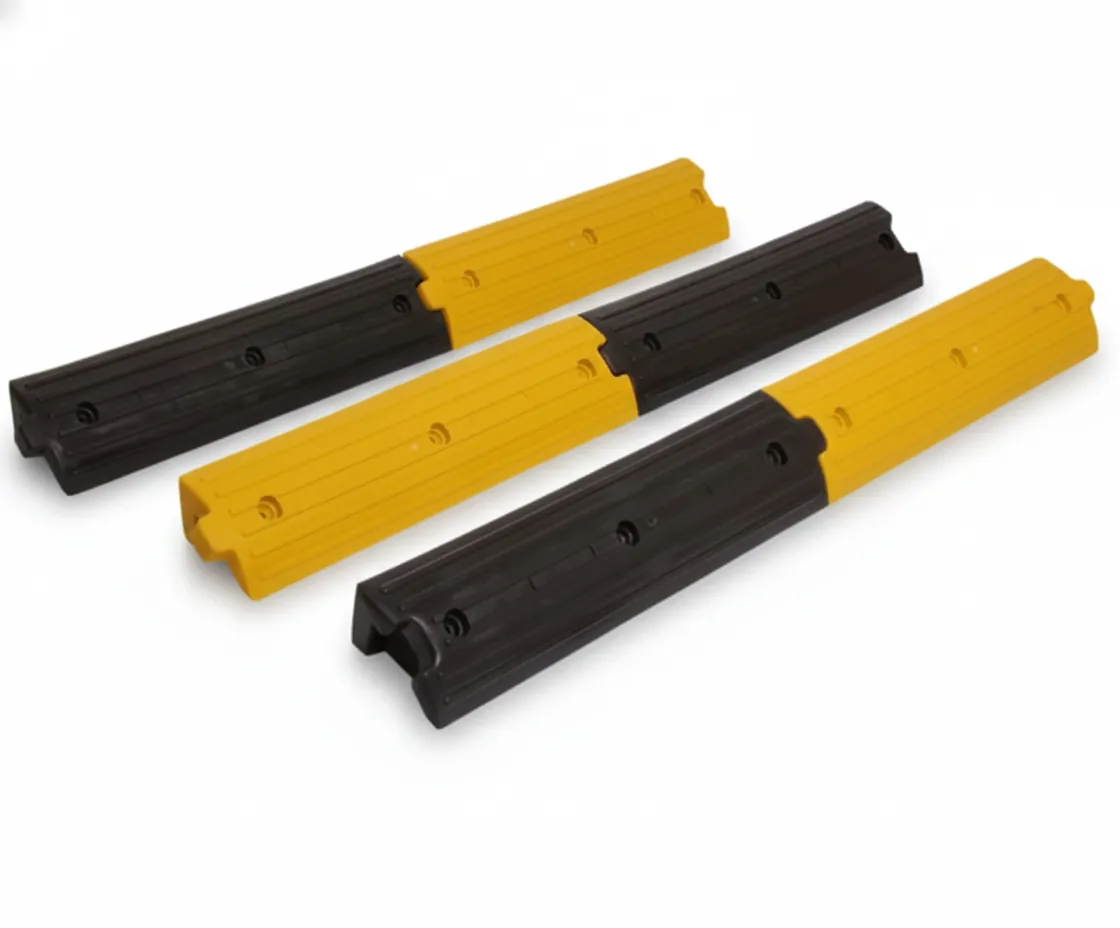

A rubber speed breaker is a heavy-duty traffic-calming unit that is bolted across the road so drivers slow down. It is widely used at society and factory gates, parking entries, petrol pumps and campus roads. This guide explains how rubber compares with other types, how to choose one, and how to install it so it stays put.
Rubber vs plastic vs concrete speed breakers
| Rubber | Modular plastic | Concrete | |
|---|---|---|---|
| Impact | Absorbs impact, gentler on vehicles and the road | Rigid, impact-resistant units | Hard and unforgiving |
| Installation | Bolted down; road reopens quickly | Bolted down; units interlock | Formwork, pouring and curing |
| Changes later | Unbolt and move or replace | Unbolt and extend | Must be broken out |
| Rust or cracking | Does not rust; resists cracking | Does not rust | Cracks and chips with time |
Kunplast makes both a rubber speed breaker and an interlocking plastic speed breaker. Rubber suits places with regular vehicle traffic. The plastic modules suit roads where you want to extend the length easily.
Speed bump or speed hump?
A speed bump is short and sharp and slows vehicles to a crawl, so it suits parking lots and entries. A speed hump is longer and gentler and suits roads where traffic should slow to a moderate speed. General US guidance puts bumps at roughly 3–8 km/h and humps at roughly 16–24 km/h. No single design suits every vehicle, so decide the dominant vehicle first (two-wheelers, cars or trucks). Indian guidance is in IRC:99.
Where to use rubber speed breakers
- Housing-society and factory gates
- Parking lots and basement ramps
- Petrol pumps, warehouses and logistics yards
- Campus, hospital and school internal roads
Do not place speed breakers on bridges, and note that the MoRTH circular of 2016 says speed breakers are not to be provided on National Highways. Always check your road authority's rules for public roads.
How to install a rubber speed breaker
- Mark the position across the full width of the carriageway.
- Clean and dry the road surface.
- Position the units and fix them with anchor bolts suitable for the surface.
- Add an advance warning sign and reflective marking.
- Re-check the bolts after the first few days.
Common mistakes
- No warning sign or reflective marking, which is a hazard at night.
- Fixing onto a dusty or wet surface, so the bolts loosen.
- Placing too many breakers on one stretch of road.
Buy rubber speed breakers in bulk in India
Kunplast manufactures in Ahmedabad, Gujarat and supplies societies, facility managers, contractors and dealers in every state of India. Call or WhatsApp us with your road width, quantity and delivery city for sizes, price and dispatch time.
Frequently asked questions
Which is better, rubber or plastic speed breaker?
Rubber absorbs impact and suits regular traffic. Plastic modules are easy to extend. Tell us your road and vehicle type and we will recommend one.
Do you supply rubber speed breakers across India?
Yes. We dispatch bulk and wholesale orders from Ahmedabad to every state.
Can a rubber speed breaker be used on a highway?
MoRTH advises against speed breakers on National Highways. They are meant for private roads, parking areas and internal roads.