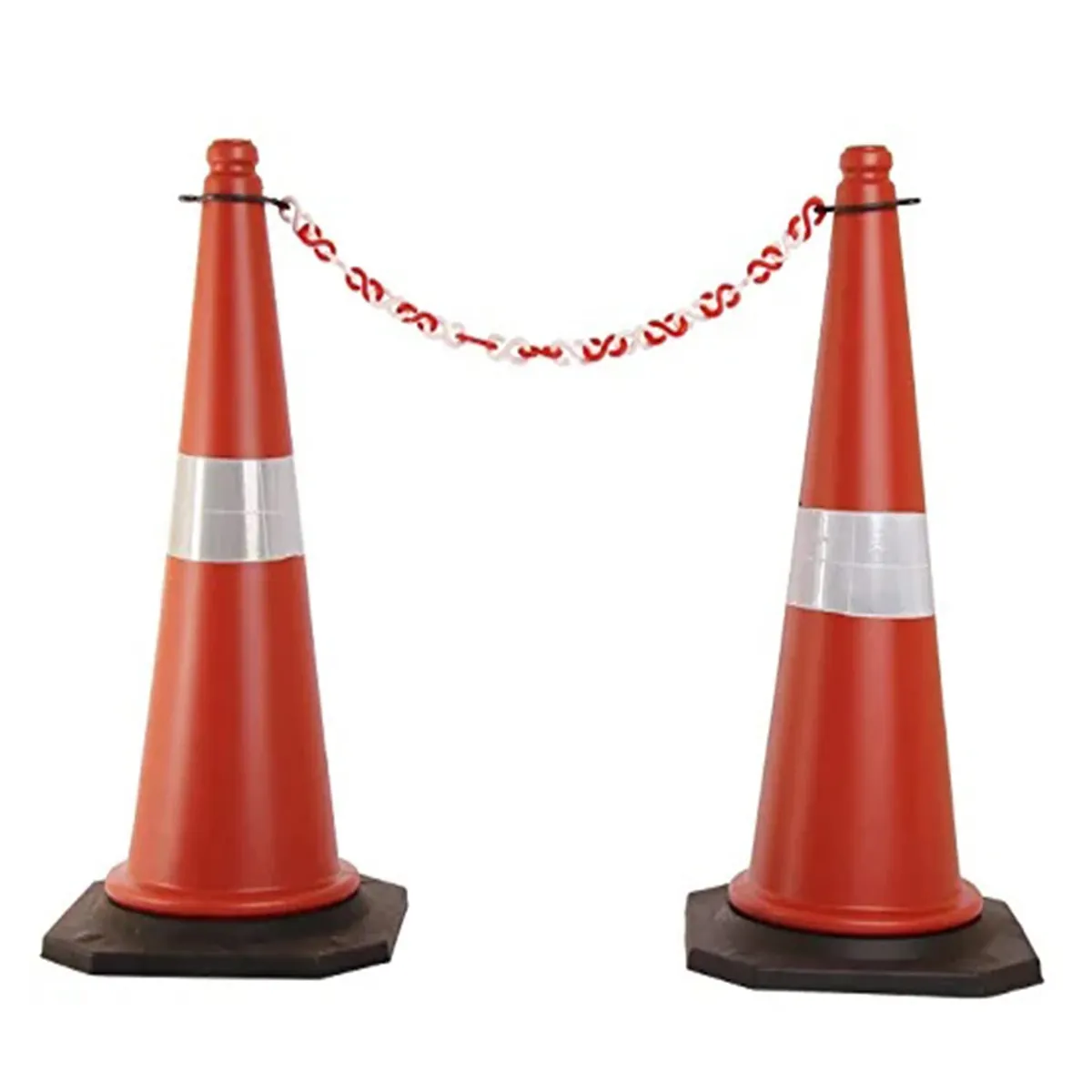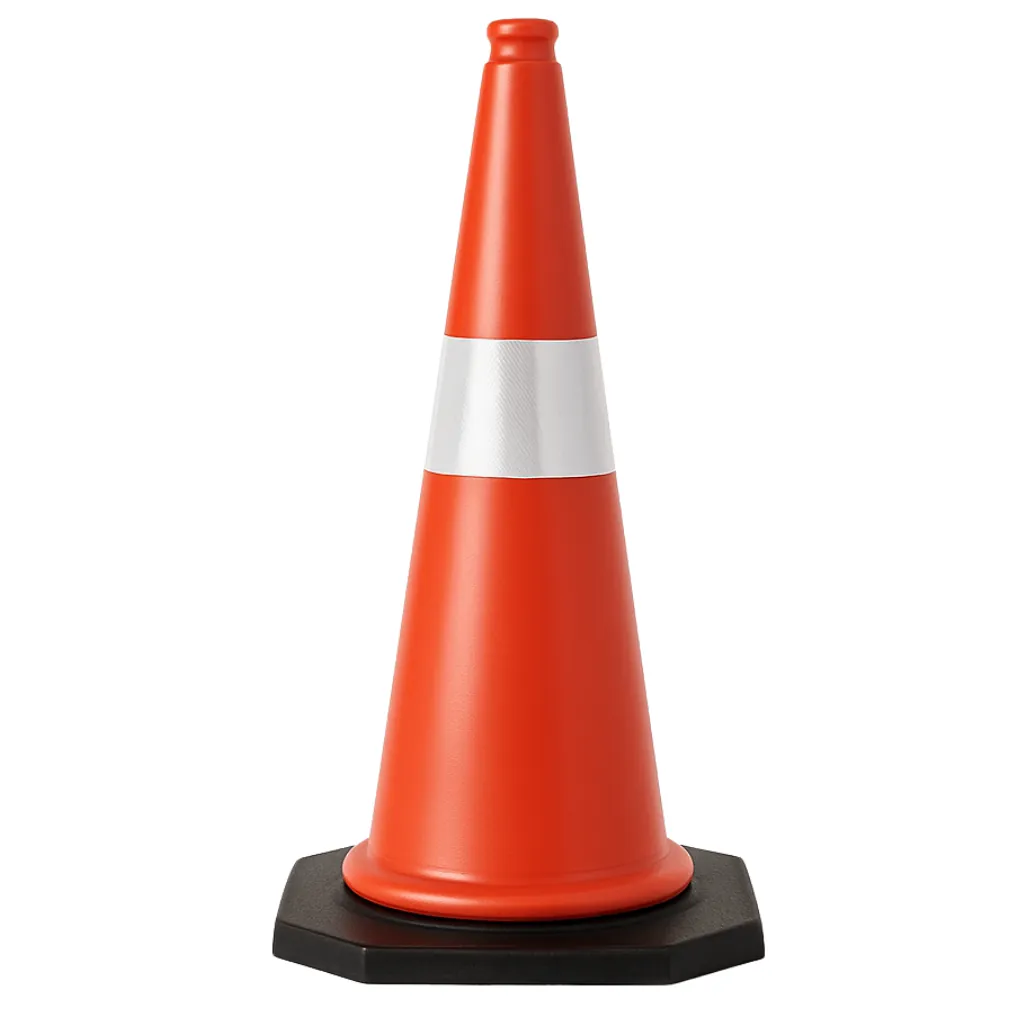

Traffic cones look simple, but the height you choose decides how early a driver sees the warning. A cone that works well in a basement car park can be almost invisible to a truck driver on a highway. This guide compares the two most common sizes in India, 750 mm and 1000 mm, and explains where each belongs.
At a glance
| 750 mm cone | 1000 mm cone | |
|---|---|---|
| Best for | Parking, indoor areas, slower city roads, events | Highways, expressways, faster roads, large work zones |
| Visibility | Good at short to medium distance | Seen from further away; more reaction time |
| Handling | Lighter and easier to stack and carry | Bulkier; needs more storage space |
| Kunplast build | PVC body, weighted rubber base, reflective collar | PVC body, heavy-duty rubber base, reflective collar |
When a 750 mm cone is the right choice
The 750 mm traffic cone is the everyday workhorse. Use it where speeds are low and drivers are already close when they notice the cone:
- Parking lots, basements and drive-throughs
- Blocking a lane or bay on city streets
- Marking spills, open drains or maintenance areas inside factories and campuses
- Crowd control at events and queues
When you need a 1000 mm cone
On faster roads, a driver needs to see the hazard much earlier. The taller 1000 mm traffic cone sits higher in the driver's line of sight, so it is noticed from further back:
- Highway and expressway lane closures and diversions
- Toll plazas and approach roads
- Large construction or road-repair zones
- Places where trucks and buses are common, since their drivers sit higher
For road works on public roads in India, work-zone layouts generally follow the Indian Roads Congress guidelines on traffic management in work zones (IRC:SP:55), and the road authority may specify cone sizes. Check your contract or permit requirements.
Making cones work at night
- Reflective collars are essential. Both Kunplast cones have a reflective collar that returns headlight beams.
- Keep collars clean. Dust and mud cut reflectivity sharply; wipe cones regularly.
- Add lights on high-speed roads where the work zone stays in place overnight.
Keeping cones in place
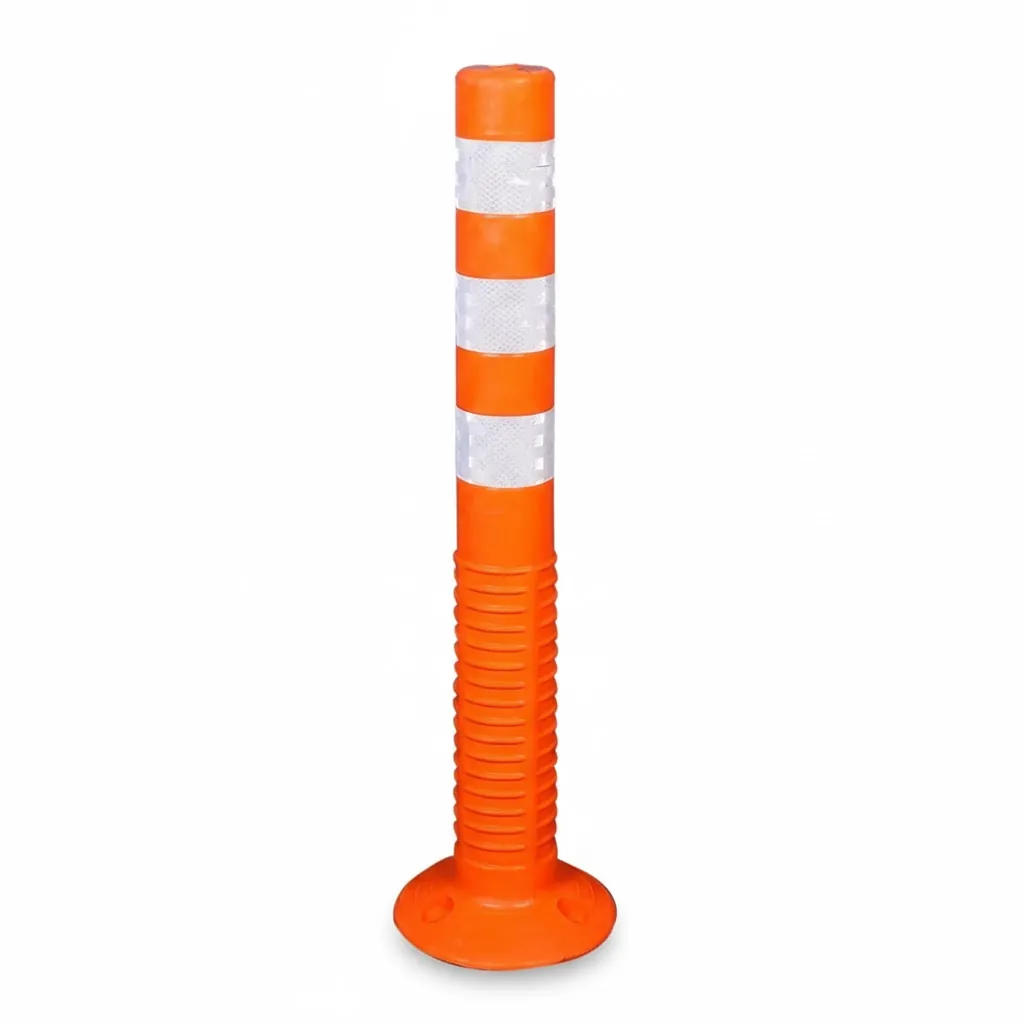
A cone that blows over is worse than no cone, because drivers stop trusting the layout. A weighted rubber base keeps the cone stable against wind and the draft from passing trucks. On long-term closures, consider flexible spring posts that are bolted down and spring back after an impact.
Spacing cones
A common rule of thumb is to place cones closer together where traffic changes lanes (the taper) and further apart along the straight length of the work zone. Faster roads need longer tapers. Follow the layout in your approved traffic management plan.
Order traffic cones in bulk
Kunplast manufactures 750 mm and 1000 mm PVC traffic cones in Ahmedabad and supplies contractors, parking operators and dealers across India. Tell us the quantity and delivery location for a quote.
Frequently asked questions
Which traffic cone size is used on highways in India?
Taller cones such as 1000 mm are preferred on highways and fast roads because drivers can see them from further away. Follow the size your road authority or traffic management plan specifies.
Is a 750 mm cone enough for a parking lot?
Yes. In parking areas speeds are low and drivers are close, so 750 mm cones are usually enough.
Why do traffic cones have rubber bases?
A weighted rubber base lowers the centre of gravity, so the cone stays upright in wind and when vehicles pass close by.