
Exposed reinforcement bars are one of the most common hazards on an Indian construction site. A worker who trips or falls onto an uncapped starter bar can be seriously injured. Rebar safety caps are a cheap, fast fix, but only if the cap actually fits the bar. This guide explains the two main cap styles, which bar sizes each one fits, and how to estimate quantities.
Quick answer: rebar cap size chart
| Bar diameter (TMT) | Mushroom cap | Damru (dumbbell) cap |
|---|---|---|
| 8 mm, 10 mm, 12 mm | 8–16 mm cap (50 mm long) | 8–12 mm cap |
| 16 mm | 8–16 mm or 16–32 mm cap | 16–32 mm cap |
| 20 mm, 25 mm, 32 mm | 16–32 mm cap (70 mm long) | 16–32 mm cap |
| 36 mm, 40 mm, 50 mm | Not covered | 32–50 mm cap |
Sizes are based on Kunplast's mushroom rebar safety caps and damru rebar caps. If a bar sits on the boundary between two sizes (16 mm or 32 mm), try a sample of both on site; the cap should push on firmly and not spin loose.
Mushroom caps vs damru caps
Mushroom rebar safety cap
The mushroom cap has a wide, rounded top on a short sleeve. The broad top spreads the force if someone falls onto the bar, and its bright yellow colour makes the hazard easy to see. Kunplast makes it in two sizes: 8–16 mm bars (50 mm cap length, 350 per pack) and 16–32 mm bars (70 mm cap length, 250 per pack).
Best for: vertical starter bars in columns and walls, slab edges and any place where workers move around at the same level as the bar ends.
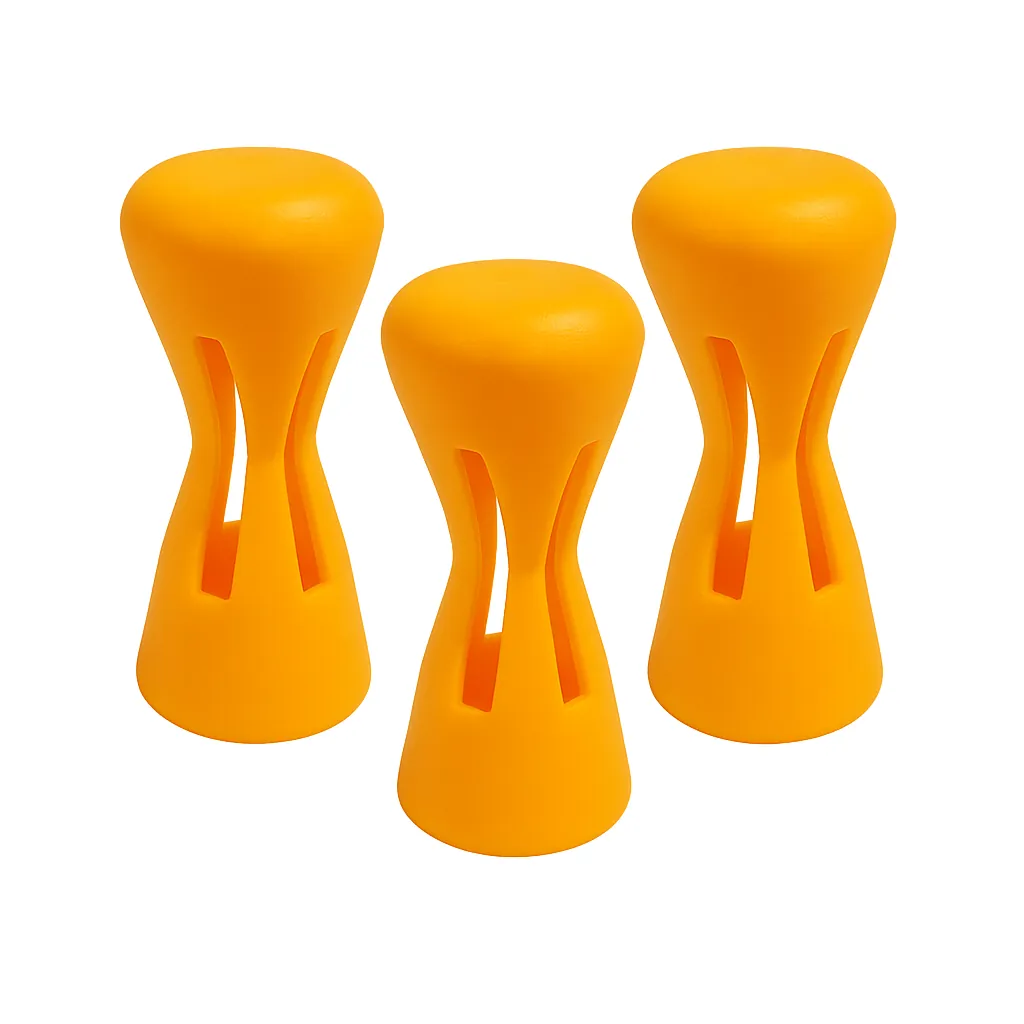
Damru (dumbbell) rebar cap
The damru cap is shaped like a dumbbell. The shape grips bars across a wider range, from 8 mm all the way to 50 mm, in three box sizes: 8–12 mm (1000 pcs), 16–32 mm (250 pcs) and 32–50 mm (100 pcs). It is made from UV-resistant orange plastic.
Best for: large-diameter bars in bridges, piers, heavy foundations and infrastructure work, and for sites that want one cap style across all bar sizes.
Where caps are needed on site
- Column and wall starter bars waiting for the next lift
- Bars projecting from slab edges, staircases and lift cores
- Dowel bars in footings, rafts and retaining walls
- Any bar end near walkways, ladders, scaffolding or work platforms
- Bars below a work area, where someone could fall onto them
Site safety plans usually require every exposed bar end within reach of workers to be capped or otherwise protected. Caps should go on as soon as bars are placed and stay on until the next concrete pour covers the bars.
How many caps should you order?
Count the exposed bar ends, not the bars. A simple way to estimate:
- Take the number of columns and walls on the floor being cast.
- Multiply by the number of vertical bars in each (from the bar bending schedule).
- Add slab-edge and staircase dowels.
- Add 10–15% for losses and damaged caps.
For example, 40 columns with 8 bars each gives 320 bar ends. Adding 15% gives about 370 caps, roughly one pack of 16–32 mm mushroom caps plus a few spares. Because caps are reusable, they move up to the next floor once the current one is cast.
Tips for getting the most from rebar caps
- Keep sizes separated on site. Mixed sizes slow fixing and lead to loose caps on large bars.
- Collect and reuse. Make one person responsible for removing caps before the pour and moving them up.
- Replace damaged caps. A cracked cap gives little protection.
- Don't rely on caps alone where a fall from height onto bars is possible. Use guardrails and covers as your safety plan requires.
Order rebar caps in bulk
Kunplast manufactures mushroom and damru rebar caps in Ahmedabad and dispatches bulk orders to construction sites and dealers across India. Tell us the bar sizes and quantities you need and we'll send pricing and dispatch timelines.
Frequently asked questions
What size rebar cap fits a 16 mm bar?
A 16 mm bar sits at the boundary of the 8–16 mm and 16–32 mm mushroom caps; most sites use the 16–32 mm cap for a firmer grip. For damru caps, use the 16–32 mm size.
Can one rebar cap fit all bar sizes?
No single cap fits everything, but damru caps cover a wide range (8 mm to 50 mm) in three sizes, so they come closest.
Are rebar safety caps reusable?
Yes. Remove them before the bars are covered and reuse them on the next floor or project.